Date of use
1900 - 1950
Place of use
Holland Új-Guinea (Új-Guinea -> Melanézia -> Ausztrália és Óceánia)
Date of collection
1956
Place of collection
Mc Cher Gref-Babó (Új-Guinea -> Melanézia -> Ausztrália és Óceánia)
Description
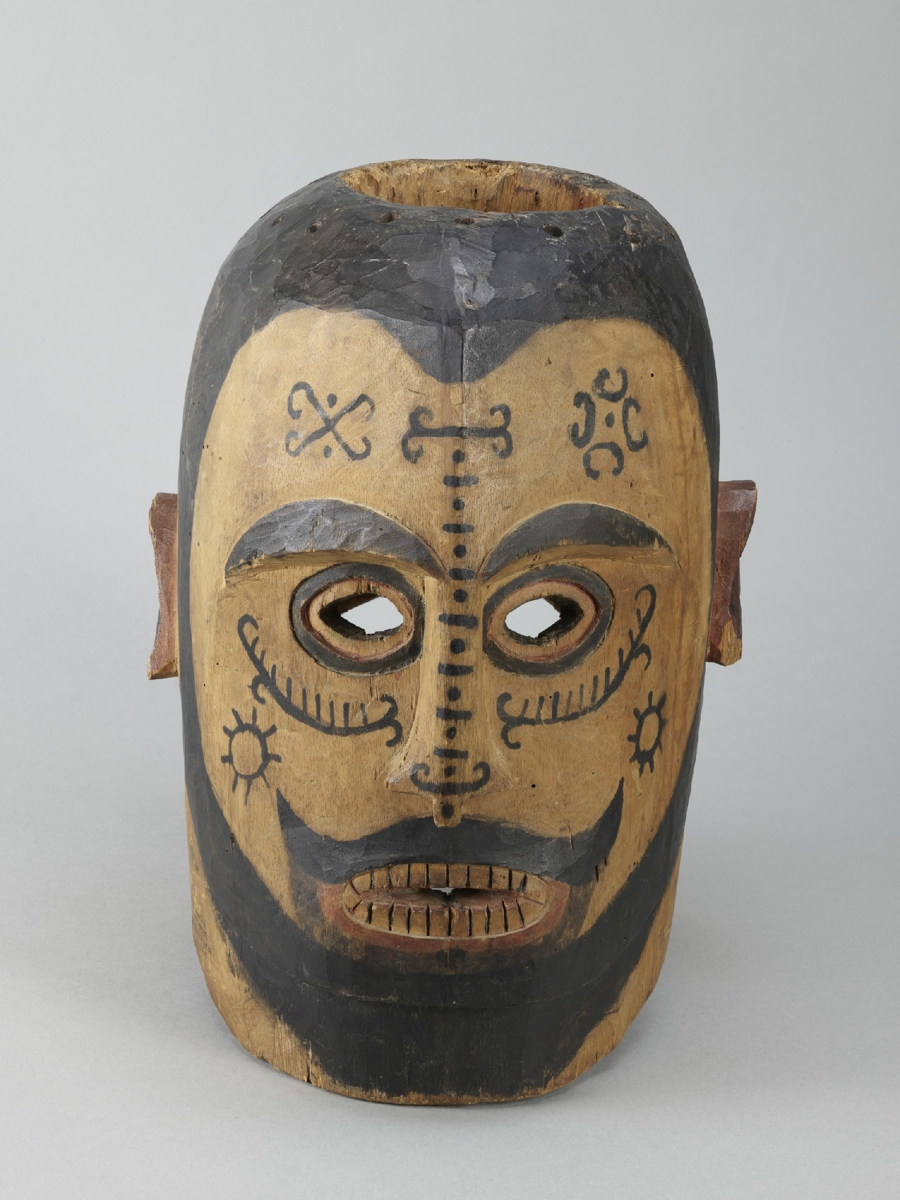
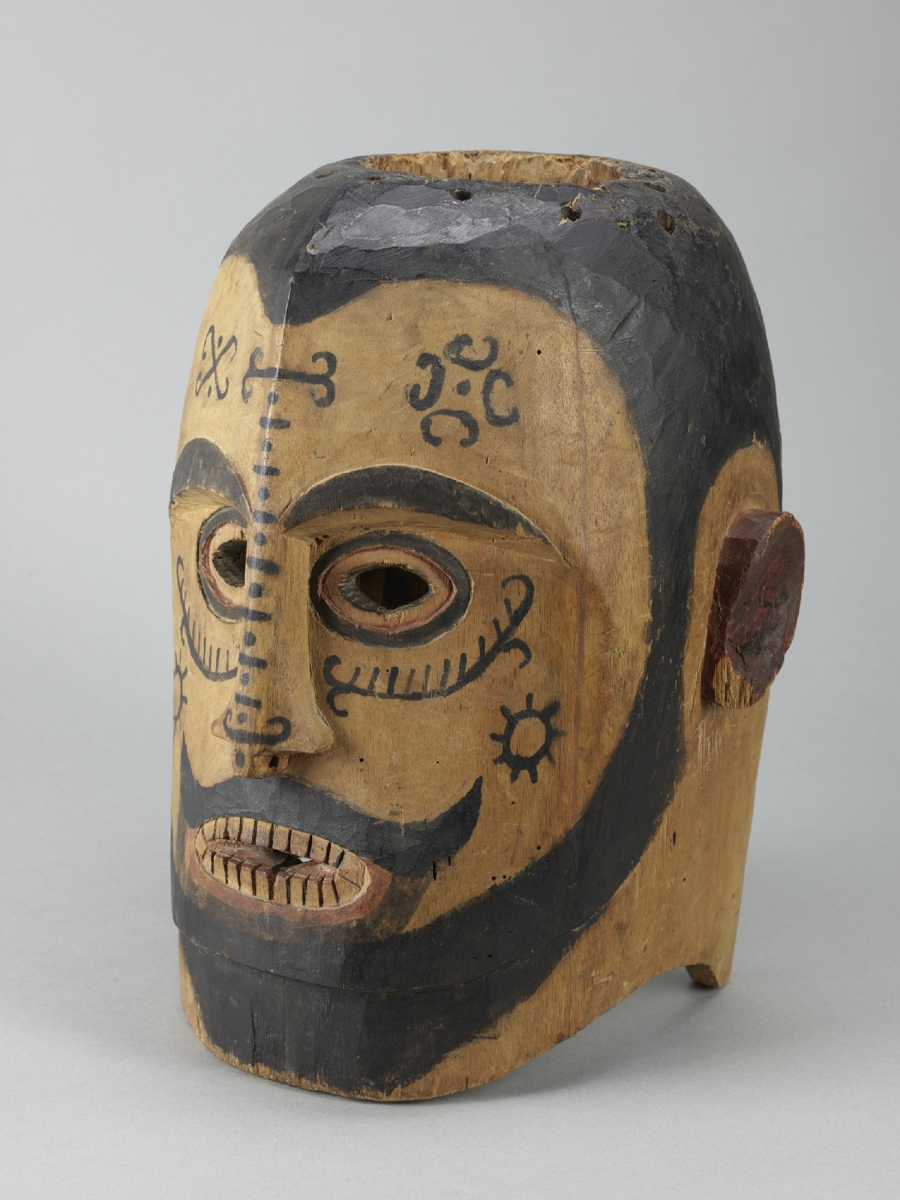
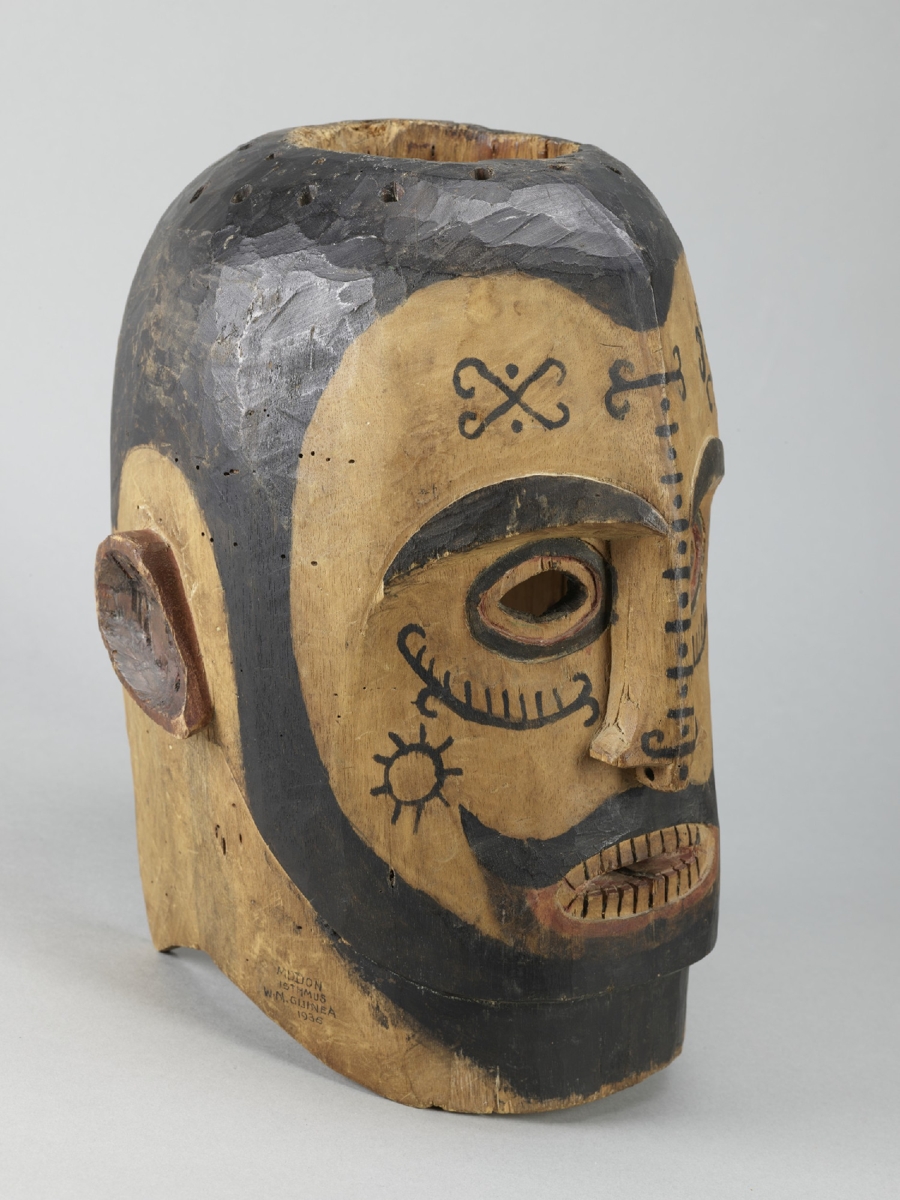
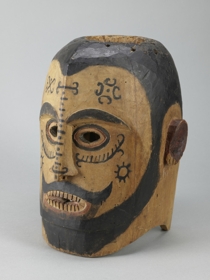
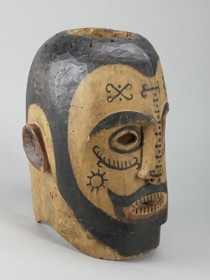
Sisakmaszk. Egyetlen fatörzs darabból, belsejének kivájásával, emberi fej formájára kialakított tárgy. A homlokra és az arcra fekete motívumokat festettek, és ugyanilyen módon jelenítették meg a bajuszt és a szakállat is. Tetején eredetileg kazuártoll csokor volt, orrán a lyukban pedig csontól készült orrtű. Érdekessége, hogy készítője is ismert. Egy elhunyt őst jelenít meg.
Cylindrical mask carved from light, soft wood. It is open at the top and bottom and has a slight ridge at the nose. Holes may be found around the upper opening. The holes on top of the head originally contained cassowary feathers communication by Horst von Bandat in a letter dated to January 9, 1967, see also his photograph, Fig. 101.). According to him, this mask from Modan (Bintuni Gulf) was used by the Weror tribe. It shows the ghost of a deceased ancestor and was carved by a local craftsman (Fig. 100.). On the facial part, the nose and eyebrows are carved into a protruding line while the eyes and the mouth perforate the material. A bone needle was originally inserted into the nose. The ears are carved in a naturalistic manner. Black painting may be found around the mouth and the eyes while the hair and beard are colored black as well. The face is decorated by black geometric motives IN HÁLA-VARGYAS BANDAT KÖNYV
Material
Dimensions
Height x Width: 35.5 x 26 cm
Previous exhibition
The descriptive data of the artifacts reflect the museum's current knowledge. Due to ongoing research, this information may be subject to change. If you have additional information or any comments regarding the data of the object, please let us know here: